With contributions from
Dominik Brabant, Clizia Carminati, Wolfram Keller, David Nelting, Elisabeth Oy-Marra, Ilaria Paltrinieri, Bernd Roling, Valeska von Rosen, Emilio Russo and Andreas Waczkat
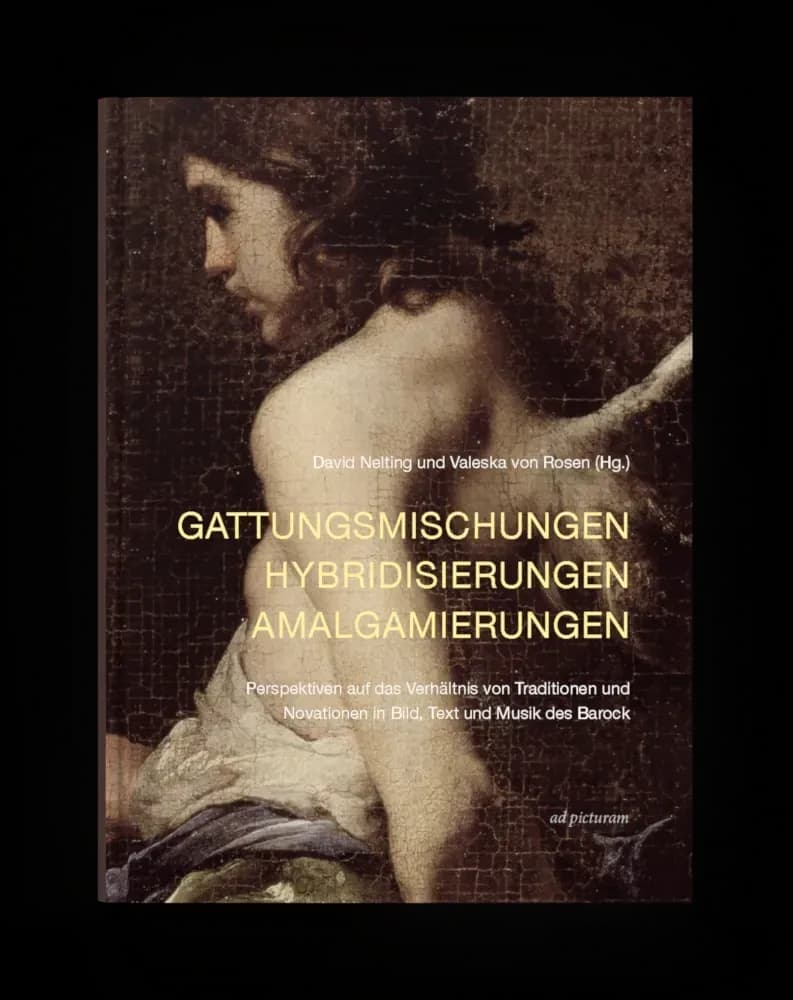
How do texts, images and musical compositions stage the relationship between the 'old' and the 'new' in times in which aesthetic certainties are dissolving along with the genre orders? How do they bring about ›novations‹ in other discursive orders, such as technical-scientific, religious or socio-political ones, and thus also make epistemic change visible? And how can these processes be described in a historically appropriate way without resorting to modern teleologies of progress?
This anthology explores these fundamental questions of historically oriented literature, art and music studies. With a focus on the Italian 17th century, with views on Shakespeare's A Midsummer Night's Dream, as well as English antiquarianism, he examines the systematic entanglements of traditions and novations and their media modeling. The focus is on the 'new' visual language of the naturalistic painting style of Caravaggio's successor, which emphatically breaks with tradition but is de facto a new form of painting. In the field of literature, a 'new' poetry theory and practice is emerging, which, with an author like Giovan Battista Marino, on the one hand explicitly connects to the rule and value systems of humanism, but on the other hand, in a playful reference to tradition, allows these to run into the void and replaces them with a baroque 'subjectivism'. For music, Claudio Monteverdi's unheard-of joy in experimentation is exemplary, as he hybridizes old and new compositional and music-making practices in his madrigals and opens up third spaces of baroque polyvalence.
The principle of mixing genres proves to be the overarching feature of the baroque innovation phenomena. The possibilities range from hybridizations, in which the tension potential of the different is visibly displayed, to amalgamations, in which the difference quality of the different reference systems is overplayed beyond recognition in favor of new aesthetic harmony.
This publication is published with the support of the German Research Foundation