With contributions from Heiko Damm, Florike Egmond, Frances Gage, Francesco Grisolia, Annkatrin Kaul, Elisabeth Oy-Marra, Lorenzo Pericolo, Simonetta Prosperi Valenti Rodinò, Claudia Reufer, Irina Schmiedel, Eva Struhal and Ingrid Vermeulen
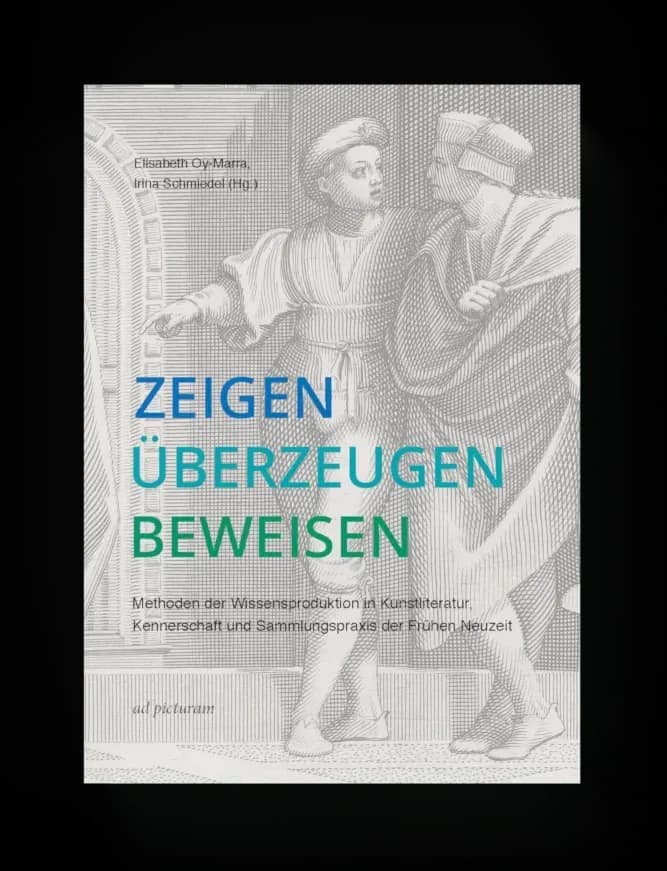
Autopsy and empiricism experienced a significant upswing in the early modern period, which was not least constitutive for the observation of art. The associated strategies of showing, persuading and proving played a key role not only in early modern scientific practice, but increasingly also in contemporary art literature and the still young discipline of connoisseurship. The importance of these concepts becomes particularly clear in the areas of collecting and presenting drawings. Various visual and textual evidence methods were used here, for example to represent specific ordering patterns, to support attributions or to convey further information.
The anthology brings together a large part of the contributions from the Show – Convince – Prove workshop. Forms of producing and communicating knowledge in art literature, connoisseurship and collecting practice in the early modern period, from October 5th to 7th, 2017 as part of the DFG-funded project The materiality of systems of knowledge and the epistemes of drawing. Sebastiano Resta's drawing albums took place in Mainz.
In addition to the discussion of autopsy concepts and their application in the emerging art history of the 17th century and its 'scientificization' in the 18th century, a wide variety of materials and methods were used to examine how the protagonists of that time actually dealt with common 'textual' and 'image knowledge' - and this in very different areas. Which forms of rhetoric and which modes of argumentation, which terms and practices are used? Can methodological influences or borrowings, for example from natural history or antiquarian studies, be traced to art history and connoisseurship? And how can we characterize – on a more disciplinary level – the relationship between art literature and collecting and connoisseurship practice?
All of these topics and questions can be understood as possible hinges between different areas of collection and knowledge and, last but not least, allow a multifaceted examination of the emerging 'art history of objects'.
With the kind support of the German Research Foundation